

Physical AI

Overview
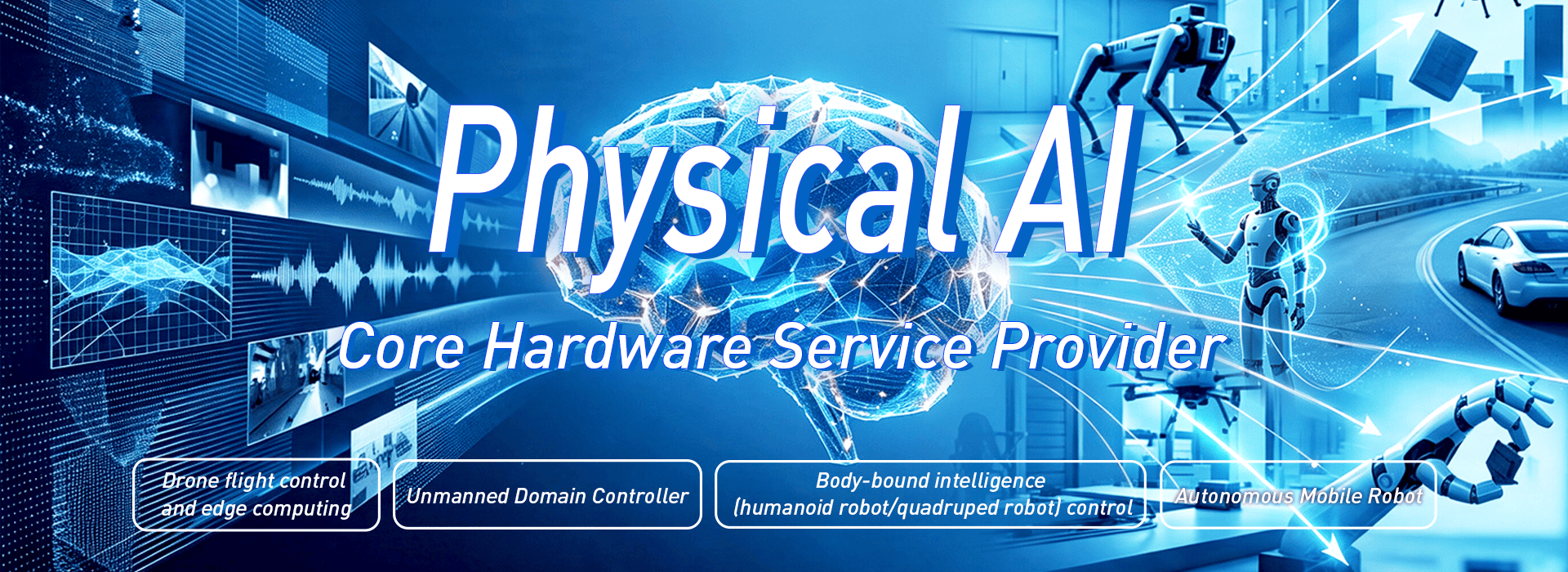
Physical AI refers to an artificial intelligence paradigm centered on "understanding and acting on the physical world," representing the next wave of AI's leap from "virtual thinking" to "physical action." Unlike traditional AI, which only "thinks" in virtual space, Physical AI emphasizes integration with physical entities and interactive learning in the real world, achieving a fully autonomous closed loop of "perception-cognition-decision-execution." Its core consists of three main elements: embodied entity (robots, autonomous vehicles, drones, etc.), intelligent kernel (large-scale models, world models, VLA models), and environmental interaction (first-person perspective autonomous adaptation).
Driven by the leap-forward advancement from large models to world models, as well as comprehensive deployments by global tech giants in end-point physical hardware such as advanced manufacturing and autonomous unmanned systems, Physical AI is rapidly emerging as a hot topic in global artificial intelligence development. The industry widely regards 2026 as the "First Year of Physical Intelligence," when models are capable not only of interpreting contextual data, but also of real-time interaction with the physical world.
Major application scenarios of Physical AI cover drones, autonomous vehicles, embodied intelligence (humanoid robots, quadruped robots, etc.), and AMRs (Automated Guided Vehicles & Autonomous Mobile Robots). Powered by Physical AI technologies, these intelligent devices are evolving from passive response to physical surroundings toward active adaptation to physical rules, providing systematic solutions for core pain points across industries including industrial manufacturing, logistics and transportation, urban governance, and emergency rescue.
As the computing and control platform for Physical AI intelligent equipment, JHCTECH industrial computers support long‑term stable operation under harsh conditions, satisfying computing and control requirements for diverse Physical AI devices such as drone flight control, autonomous driving of unmanned vehicles, motion control of humanoid robots, and autonomous navigation for AGVs/AMRs.
Key Technologies and Trends of Physical AI
- World Models and Simulation‑based Training: Pre‑training via digital twins and simulation environments to cut real‑world data collection costs, and enable physical reasoning and transfer deployment.
- 5G/5G‑A and Edge AI: High‑bandwidth and low‑latency networks support cluster scheduling and millisecond‑level local inference to guarantee real‑time performance of control closed loops.
- Multi‑agent Collaboration: Combine multi‑agent reinforcement learning with large‑language‑model schedulers to realize natural‑language‑driven task decomposition and distributed collaboration.
- Embodied Intelligence and Humanoid Robots: Integrate Vision-Language-Action large models to endow robots with multimodal perception, comprehension and autonomous decision-making capabilities.
Comprehensive Solution Portfolio
Solution for Drone Industry Applications
Autonomous Driving Domain Controller Solutions
Embodied Intelligence (Humanoid / Quadruped Robot) Solutions
AGV / AMR Autonomous Mobile Robot Solutions
